News
When Inaccurate Measurements Create Problems That Aren’t Really There
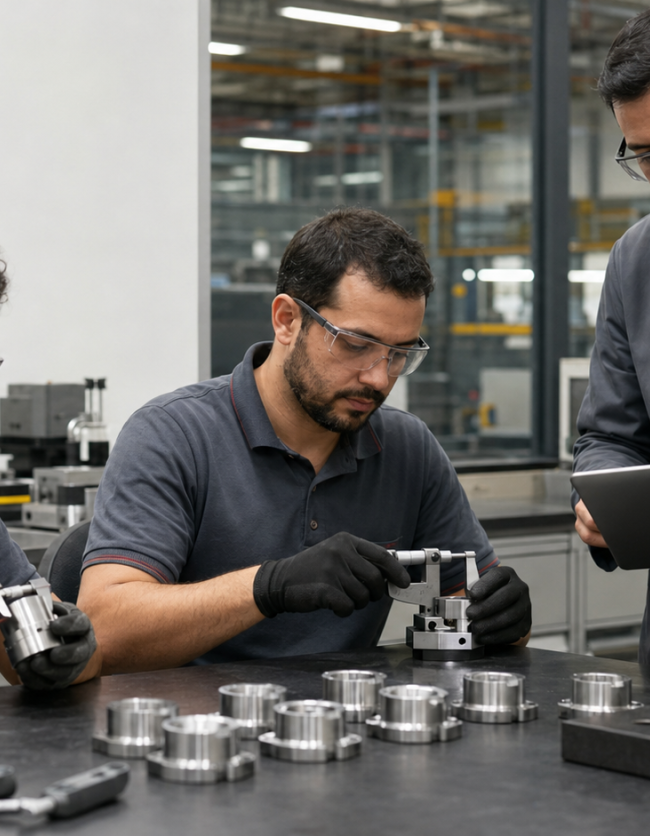
Learn how Measurement System Analysis (MSA) helps distinguish actual process variation from errors introduced by the measurement system itself.
Industrial decisions depend on data quality. When a measurement system cannot be trusted, a reading may point to a problem that is not there—or hide a real issue. Measurement System Analysis (MSA) determines whether a system can produce reliable, consistent results for sound decision-making.
What makes up a measurement system?
A measurement system includes everything that can affect a result: the instrument, operator, method, part, fixture, software, environment and interpretation criteria.
A calibrated instrument alone does not guarantee reliable measurements. If operators use different techniques, temperature affects the material or the procedure allows different interpretations, results may vary even when the measured characteristic remains unchanged.
When measurements create “phantom” defects
Imagine a component that begins showing results outside its specified tolerance. The response may be to stop production, adjust the machine or investigate the batch. If the system is unstable, however, the issue may lie in data collection. The company then starts addressing a defect that exists only in the measurement results. The opposite can also happen: a system with insufficient sensitivity may hide variation until it causes rework, returns or customer-detected failures. Before changing a process, it is essential to confirm that the data reflects reality.
What does MSA evaluate?
Repeatability: Variation observed when the same operator measures the same part several times using the same instrument under the same conditions. Relevant differences may indicate issues with the equipment, method or positioning.
Reproducibility: Differences between results obtained by different operators. They may reveal poor standardization, insufficient training or inconsistent criteria.
Stability: The system’s ability to maintain its performance over time. Wear, impact, environmental conditions or insufficient maintenance can affect the results.
Bias: The difference between the average result and an accepted reference value. High bias indicates readings consistently above or below the true value.
Linearity: Determines whether bias remains consistent across the operating range. An instrument may be accurate near the middle of its range but show errors at its limits.
Gage R&R: equipment and operators: Gage R&R evaluates repeatability and reproducibility. Different operators measure the same parts to identify how much variation comes from the equipment and how much is associated with the people using it. The greater the measurement system’s contribution to total variation, the lower the confidence in the data. Acceptance criteria depend on the industry, the criticality of the characteristic and customer requirements.
Impact on decision-making
An inadequate system can lead to unnecessary adjustments, rejection of conforming parts, approval of out-of-specification components, rework, inaccurate process capability studies and release delays.
When should an MSA study be performed?
MSA should be carried out before a new system is introduced, after changes to the equipment or method, when new operators join, during product development and whenever results become inconsistent.
It should also be part of continuous improvement and approval processes such as PPAP, especially where small variations can affect performance, safety or compliance.
Reliable measurement reveals the process as it truly is
Sound decisions depend on data that accurately represents the process. Understanding measurement limitations helps a company separate actual variation from noise, focus investigations and avoid ineffective interventions. Global Group supports companies in developing, validating and improving engineering and quality processes. Would you like to assess the reliability of your measurement systems? Contact Global Group to learn more about our solutions.