News
Physical AI: The Next Step in Industrial Automation
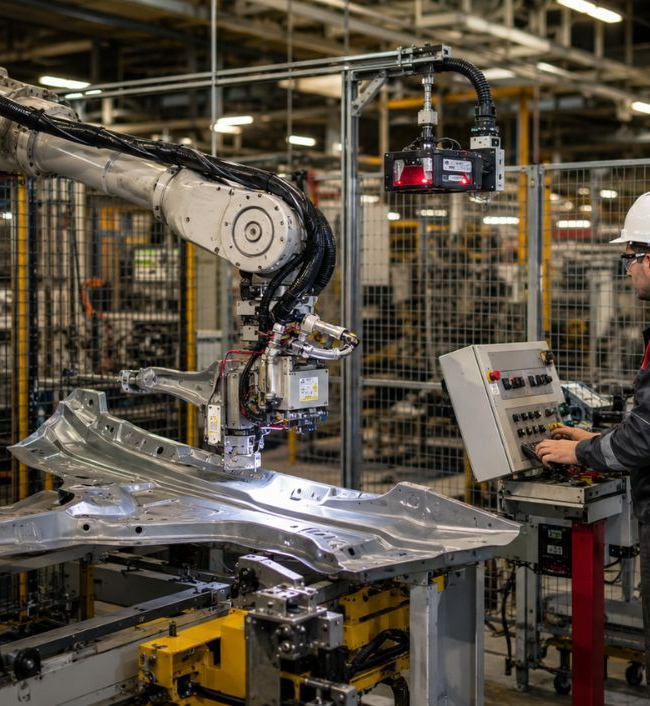
Physical AI enables machines, robots and autonomous systems to understand their surroundings, make decisions and act in the real world. In manufacturing, it increases equipment adaptability across production, quality, maintenance and safety.
What is Physical AI?
Physical AI applies artificial intelligence to systems that interact directly with physical environments. It combines AI models, cameras, sensors, robotics, control systems and computing capabilities.
These technologies allow machines to recognize objects, interpret conditions, plan movements and respond to process changes. Computer vision can also identify components, surface variations and assembly defects.
How does Physical AI work in manufacturing?
Physical AI operates through a continuous cycle built around three capabilities:
Perception: sensors and cameras capture images, temperature, vibration, pressure, movement and other conditions.
Interpretation: AI models analyze data and recognize patterns, objects or situations.
Action: machines, robots or control systems respond within engineering-defined parameters.
Each response depends on reliable data, system integration and clear operating rules. In industrial environments, physical decisions must account for accuracy, repeatability and safety.
What are its main industrial applications?
Adaptive robotics: Industrial robots can recognize component variations and adjust their movements to actual conditions.
Quality inspection: Computer vision detects deviations, helping reduce rework and improve traceability.
Predictive maintenance: Equipment data can reveal degradation and support maintenance planning.
Internal logistics: Autonomous mobile robots can interpret routes, avoid obstacles and adapt their movement.
Operational safety: Cameras and sensors can detect unsafe conditions. These applications require protocols, redundancy and human oversight.
How is it different from conventional automation?
Conventional systems usually execute predefined sequences. Physical AI adds perception and adaptability, allowing systems to respond to specific changes in their environment.
This flexibility introduces additional engineering requirements. Integration with existing equipment, cybersecurity, data governance, validation and workforce development become central parts of the project.
What are the main implementation challenges?
Adoption should begin with a relevant operational problem. Companies must then assess data availability, infrastructure and application risks.
Challenges include legacy integration, data quality, connectivity, computing capacity, functional safety, cybersecurity, validation, workforce preparation and performance monitoring.
Pilot projects help test assumptions, measure results and correct issues before a solution is expanded to other areas.
Will Physical AI replace industrial professionals?
Physical AI is expected to reshape activities and required skills. Professionals remain essential for defining objectives, establishing limits, validating responses, managing exceptions and making high-impact decisions.
Engineering expertise, operational knowledge and artificial intelligence must work together. Technology expands analytical and execution capabilities, while people provide context, accountability and critical judgment.
The next stage of industrial intelligence is physical
Physical AI brings computational intelligence closer to industrial operations. Its potential lies in turning information into precise, context-aware and safe actions.
Consistent results depend on solutions designed around real plant conditions and a clear engineering strategy.
Global Group monitors the technologies reshaping the automotive, agricultural and industrial sectors. Through technical expertise and an integrated approach to projects, we help turn innovation into reliable solutions aligned with each client's operational challenges.